Stock Compensation, Simplified
RSUs, ESPPs, ISOs & NSOs—in plain English.

Stock Compensation, Simplified
RSUs, ESPPs, ISOs & NSOs — in plain English.
Imagine opening your compensation package and discovering it could be worth hundreds of thousands, or even millions, of dollars one day.
That’s the opportunity stock compensation can create.
It’s also where I see some of the biggest financial mistakes, and often the most expensive ones.
The good news is that most of those mistakes are avoidable. It starts with understanding what you actually own.
Let’s simplify the four most common types of stock compensation.
Restricted Stock Units (RSUs)
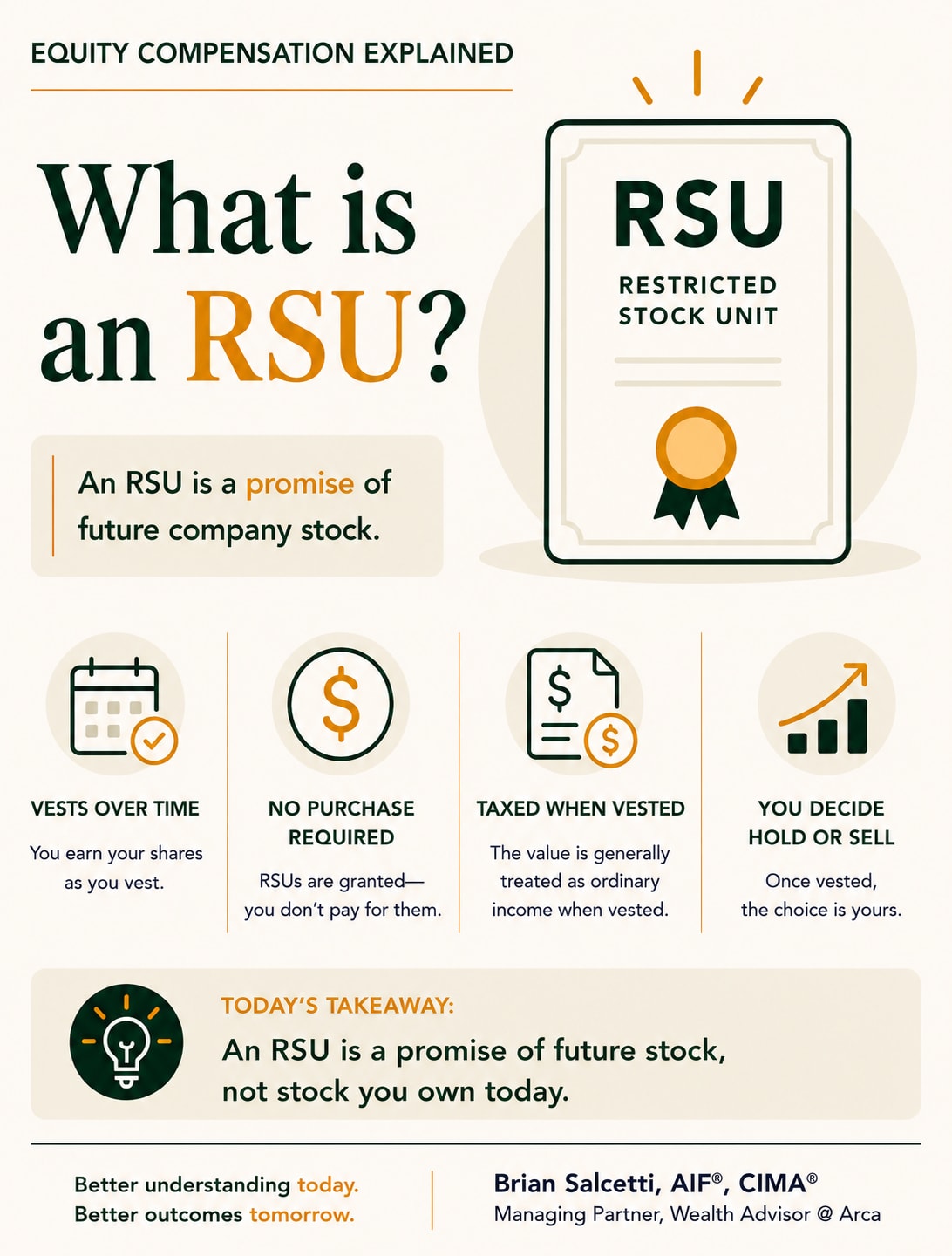
An RSU is a promise of future company stock.
When your employer grants RSUs, you don’t own the shares immediately. Instead, you earn them over time through a vesting schedule.
Think of it this way: your company is saying, “Stay with us, and over time these shares become yours.”
Key points:
No purchase required.
Shares become yours as they vest.
Their value is generally taxed as ordinary income when they vest.
After vesting, you decide whether to hold the shares or sell them.
Why it matters: Because RSUs arrive automatically, it’s easy to end up owning far more of one company’s stock than you’d ever choose to buy on purpose. That hold or sell decision often gets overlooked, but it can shape your long-term wealth and your risk more than the grant itself.
Employee Stock Purchase Plans (ESPPs)
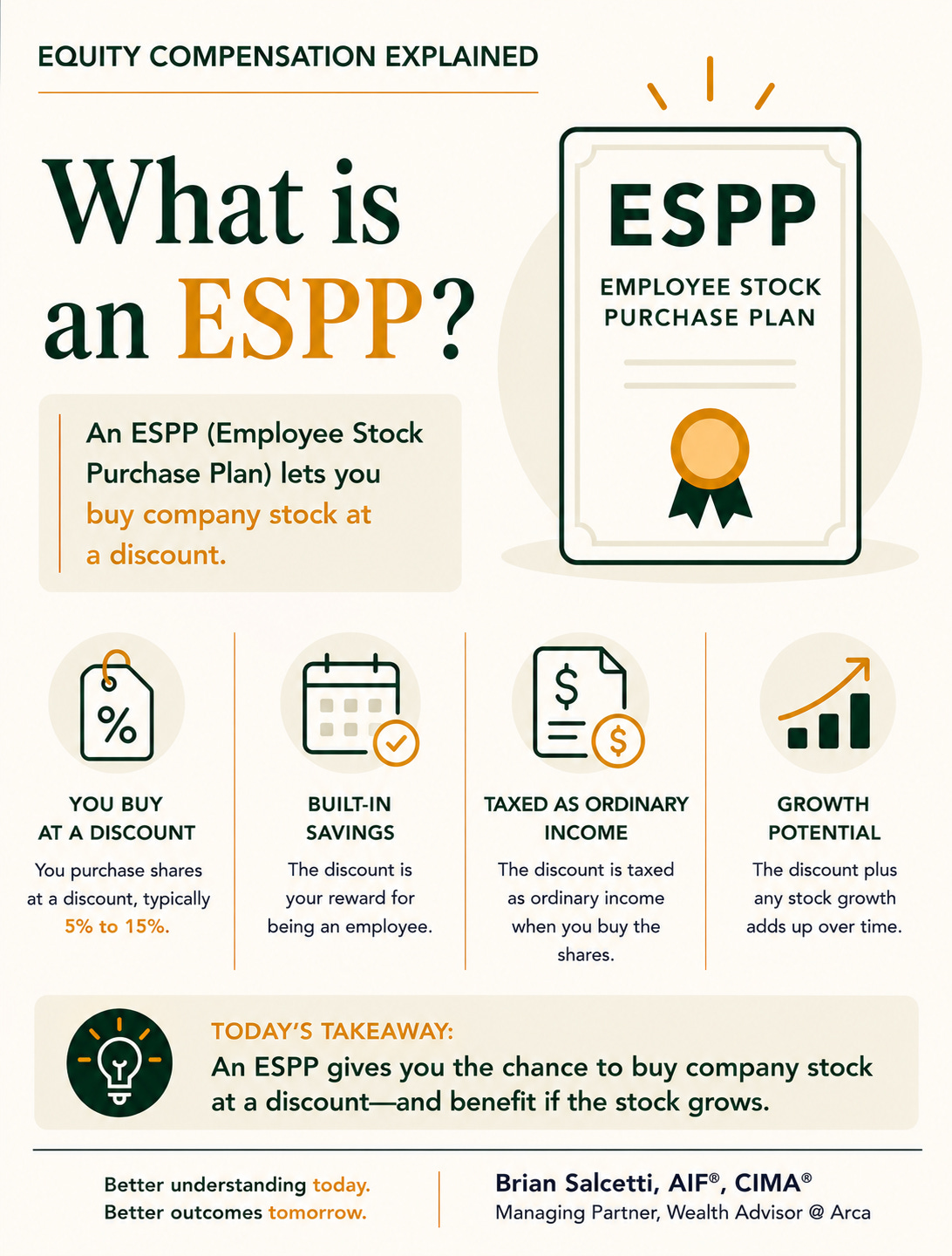
An ESPP lets you purchase company stock, often at a discount, through automatic payroll deductions.
Think of it like an employee discount. Except instead of saving money on a product, you’re buying company stock at a lower price.
Many plans offer discounts of up to 15%, which makes an ESPP one of the most valuable workplace benefits available, and one of the most overlooked.
Why it matters: Used thoughtfully, an ESPP can be one of the simplest ways to build wealth through your employee benefits. Used carelessly, the discount can mask real risk. More on that in a future edition.
Incentive Stock Options (ISOs)
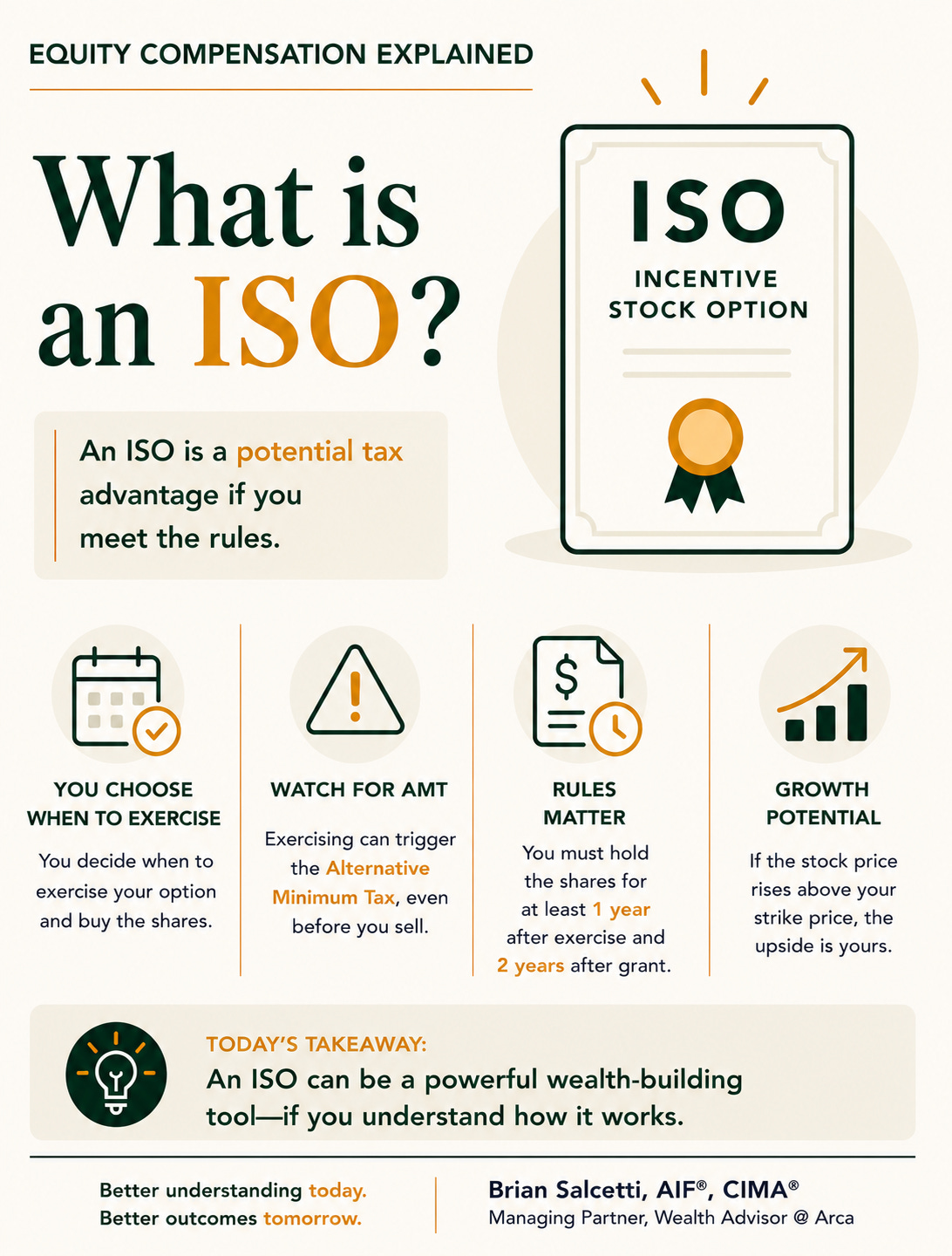
An ISO isn’t stock. It’s the right to buy company stock at a fixed price, called the strike price.
Imagine locking in today’s price for a stock you believe could be worth much more down the road. That’s where the opportunity comes from.
If you hold the shares long enough after exercising, you may qualify to pay a lower tax rate than you would with other types of stock options.
Why it matters: Knowing when to exercise, and how long to wait before selling, can meaningfully change how much of the gain you actually keep.
Non-Qualified Stock Options (NSOs)
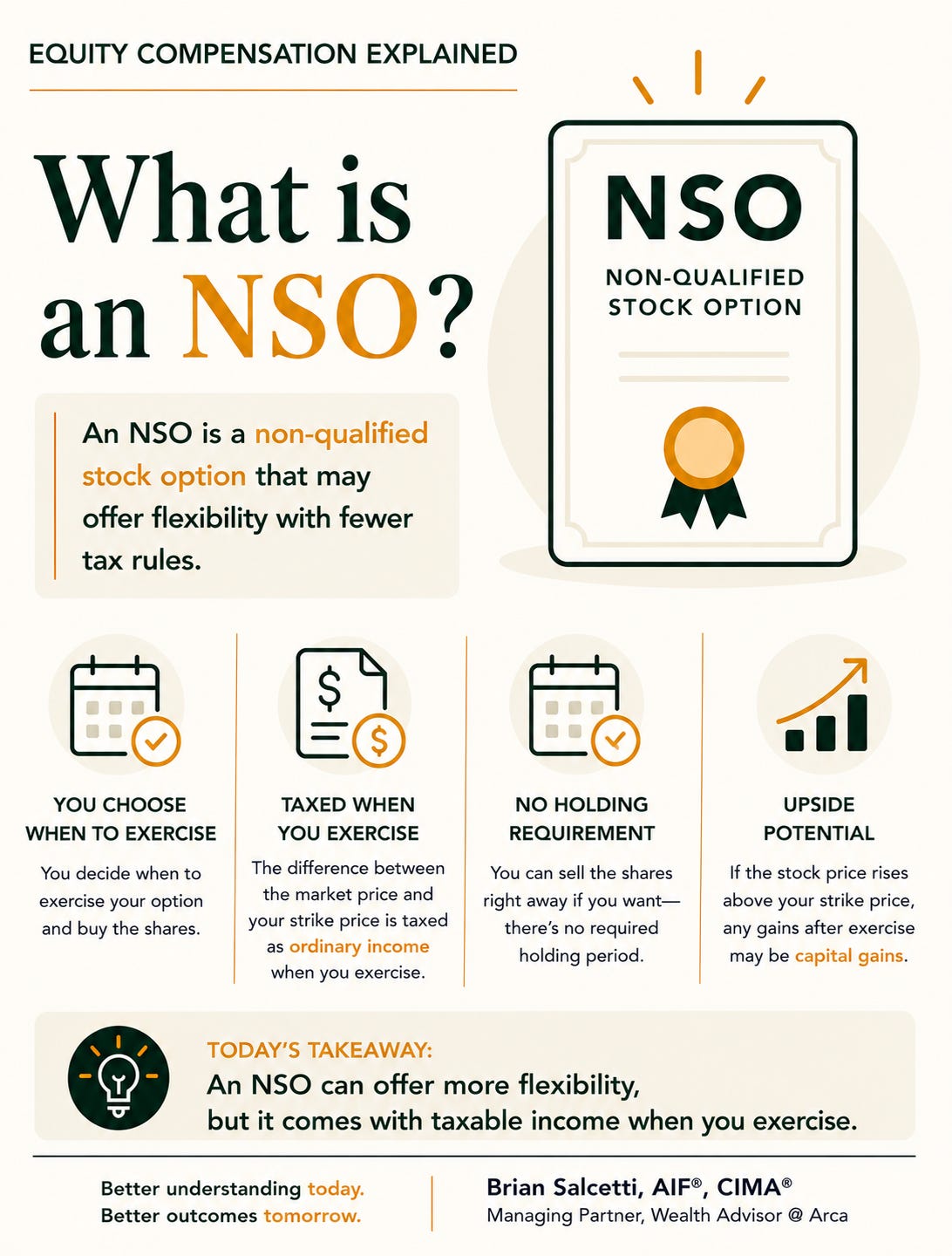
Like an ISO, an NSO gives you the right to buy company stock at a fixed price. The biggest difference is how it’s taxed.
Think of an NSO like a coupon that lets you buy company stock at yesterday’s price before it expires. If the stock price rises, that coupon becomes more valuable.
NSOs generally don’t come with the same tax advantages as ISOs, but they remain an important part of many compensation packages.
Why it matters: Understanding when to exercise, and when not to, can significantly affect how much you ultimately keep after taxes.
A Quick Comparison
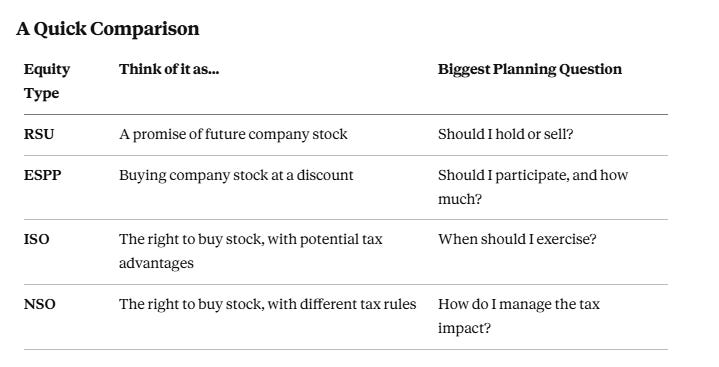
There isn’t a “best” type of stock compensation. Each one serves a different purpose. Some offer guaranteed value, others offer more upside or more tax flexibility. The key isn’t which type you have. It’s understanding how to make the most of it.
What’s Coming Next
This article is just the beginning. In the future, I’ll cover other important questions, since there’s a lot more worth unpacking, including:
What does vesting actually mean?
When do taxes come into play?
Why is tax withholding often not enough?
Should you hold or sell company stock?
The biggest mistakes I see employees make, and how to avoid them.
These are also exactly the kind of questions worth bringing to your own financial advisor, since the right answer usually depends on your income, your other investments, and your personal goals.
My goal isn’t to turn you into a stock comp or tax expert. It’s to help you ask better questions and make smarter decisions with one of the most valuable benefits your employer may offer.
Smarter Takeaway
Stock compensation has created life-changing wealth for countless employees.
But simply receiving equity doesn’t create wealth.
Making smart decisions with it does.
The more you understand today, the more options you’ll have tomorrow.